
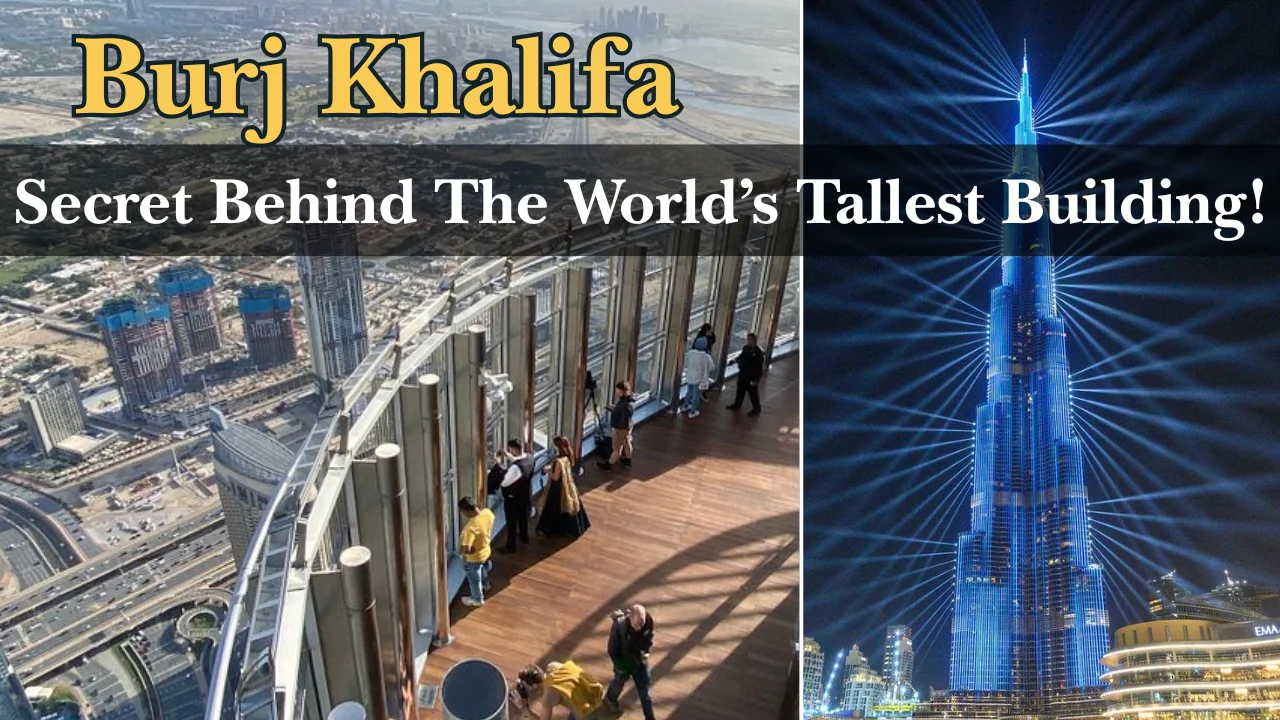
Burj Khalifa stands in the heart of Dubai and represents the ambition of the UAE. It is more than a tall tower. It is a place where people live, work, stay in hotels and enjoy views that reach far across the desert and the sea.
- Burj Khalifa: Secret Behind World’s Tallest Building
- Where is the Burj Khalifa?
- How tall is the Burj Khalifa?
- Is it still the tallest building in the world?
- Key world records and global rankings
- Why the Burj Khalifa Was Built
- History, Timeline and Construction Journey
- Planning and development phase
- When construction started and finished
- Time taken to build
- Opening in 2010
- Architectural Concept and Design Inspiration
- Architecture and Structural Engineering
- The buttressed core system
- The Y-shaped design and megacolumns
- Why traditional skyscraper designs would not work
- How the tower defies gravity
- Foundations and Substructure
- Materials, Concrete and Steel
- Wind, Heat and Environmental Resistance
- Construction Technologies and Methods
- Exterior Systems and Cladding
- Mechanical, Electrical and Safety Systems
- Inside Burj Khalifa – What’s on Different Levels
- Luxury, Interiors and Premium Finishes
- Visiting the Burj Khalifa
- Living or Staying in the Burj Khalifa
- Finance and Development Background
- Sustainability and Eco-Friendly Operations
- Energy efficiency strategies
- Water systems and environmental management
- Can super-tall buildings be sustainable?
- Cultural and Economic Impact on the UAE
- World Records, Achievements and Milestones
- Urban Myths vs Verified Facts
- Interesting and Fun Facts About Burj Khalifa
- The Burj Khalifa’s Legacy and Future of Super-Tall Buildings
- FAQs
For residents, businesses and visitors, understanding how the tower was planned and how it works helps us see why Dubai became a global city. This guide explains its story in simple words, from construction to tickets, from engineering to everyday life inside the building.
Burj Khalifa: Secret Behind World’s Tallest Building
Before going deep into design and technology, here is a quick overview. These fast facts help readers understand why the building is important locally and internationally.
Where is the Burj Khalifa?
The tower is located in Downtown Dubai, next to Dubai Mall and the Dubai Fountain. The area is one of the busiest tourism and business zones in the UAE.
It is well connected by Sheikh Zayed Road, the Metro, taxis and public buses. Visitors often combine a trip with nearby landmarks such as Dubai Miracle Garden, Gold Souk Dubai, or Water Front Market Dubai on the same travel plan.
How tall is the Burj Khalifa?
Burj Khalifa rises about 828 metres into the sky. It has more than 160 usable floors, plus levels for machinery and services.
From far away, the spire can be seen by drivers entering Dubai from neighbouring emirates.
Is it still the tallest building in the world?
Yes, it remains the tallest completed building on Earth. Many projects are announced globally, but none have officially taken its title yet.
For Dubai residents, this record is a source of pride.
Key world records and global rankings
The tower holds several important achievements, including:
- Tallest free-standing structure
- Highest occupied floor
- One of the fastest elevator systems
- Highest outdoor observation deck at certain levels
These records place Dubai strongly on the global map.
Why the Burj Khalifa Was Built
The project was never only about height. It was part of a bigger economic and urban strategy.
Dubai’s vision for growth
Dubai aimed to diversify beyond oil and become a centre for tourism, finance and trade. A landmark tower helped attract investors and international attention.
The surrounding district grew together with the skyscraper.
Economic and cultural importance
The building created thousands of jobs, supported suppliers and raised property demand in nearby communities, including areas such as Al Sufouh Dubai Area.
It also became a symbol of modern Arab achievement.
Global image and tourism impact
Photos of the tower appear in films, advertisements and travel guides. Tourists often say visiting it is their top priority when arriving in the UAE.
Hotels, restaurants and transport services benefit daily.
History, Timeline and Construction Journey
Building such a structure required years of preparation and planning.
Planning and development phase
Experts studied soil, wind and transport needs. Designers worked on shapes that would be beautiful and safe.
Authorities approved large infrastructure upgrades around the site.
When construction started and finished
Ground works began in 2004. The exterior was largely completed by 2009, followed by interior finishing.
Time taken to build
From excavation to final touches, the work lasted roughly six years. Considering the scale, this was very fast.
Opening in 2010
The tower officially opened in January 2010 with fireworks and international media coverage. The event confirmed Dubai’s position as a world city.
Architectural Concept and Design Inspiration
The design connects modern engineering with regional identity.
Origins of the design idea
Architects wanted a shape that would reduce wind pressure while looking elegant. Several models were tested before final approval.
Islamic and regional influences
Patterns found in Islamic art inspired the geometry. The base resembles a desert flower when viewed from above.
Floor plan and functional organisation
The building is divided into zones, including:
- Hotel levels
- Residences
- Offices
- Observation decks
- Technical floors
This separation helps manage lifts and utilities efficiently.
Architecture and Structural Engineering
The real success of Burj Khalifa lies in its clever structural system.
The buttressed core system
A central concrete core is supported by three wings. Each wing strengthens the others.
This allows the tower to rise extremely high without losing stability.
The Y-shaped design and megacolumns
The Y plan spreads weight and gives many rooms window views. Large columns carry vertical loads down to the foundation.
Why traditional skyscraper designs would not work
Older designs would sway too much at this height. Engineers needed new solutions for wind and weight.
How the tower defies gravity
By directing loads into the ground and reducing movement at the top, the building remains comfortable for occupants.
Foundations and Substructure
What lies below the surface is just as important as what we see.
Excavation works
Deep pits were dug and stabilised. Workers removed huge amounts of sand and rock.
Piling and base structure
Long reinforced piles were driven far into the earth to anchor the tower.
Challenges of desert soil conditions
Engineers had to manage heat, salt and groundwater. Special treatments protected concrete from damage.
Materials, Concrete and Steel
Only advanced materials could meet the safety demands.
Types of materials used
The tower uses high-strength concrete, structural steel, aluminium and reflective glass.
High-performance concrete
This concrete can handle pressure and high temperatures. Ice was sometimes added during mixing to control heat.
Reinforcement and structural strength
Steel bars inside the concrete create extra durability and prevent cracking.
Wind, Heat and Environmental Resistance
Dubai’s climate is tough, so protection is essential.
Wind tunnel testing
Scale models were tested many times. Small shape adjustments reduced vibration.
Aerodynamic design strategies
Setbacks at different heights break the wind flow. This prevents strong swaying.
Resistance to extreme temperatures and sand
Cladding materials resist dust, sun and humidity, ensuring long service life.
Construction Technologies and Methods
Modern tools helped speed up work.
Concrete pumping to extreme heights
Special pumps pushed concrete hundreds of metres upward, a world record at the time.
Cranes and lifting systems
Powerful cranes lifted heavy parts quickly and safely.
Digital modelling and simulation
Computer models predicted stress and movement before real construction.
Exterior Systems and Cladding
The outer skin protects and beautifies the tower.
Curtain wall design
Panels were installed in repeating units, allowing faster assembly.
Glass and aluminium elements
These materials reflect sunlight and reduce heat gain.
Window washing systems
Tracks and machines allow cleaning teams to maintain the façade throughout the year.
Mechanical, Electrical and Safety Systems
A city in the sky needs complex services.
Fire safety measures
Features include alarms, refuge areas, pressurised stairs and advanced sprinklers.
Elevators and lift technology
Double-deck lifts move thousands of people daily with high speed.
Building services and maintenance floors
Hidden levels contain water tanks, cooling equipment and control rooms.
Inside Burj Khalifa – What’s on Different Levels
- The tower functions like a vertical neighbourhood.
- From elevated observation points, visitors may take in expansive views of the Dubai skyline, desert, and shoreline.
- Particularly at sunset and in the evening, these decks are a popular location for photographs.
- Residents in luxury apartments enjoy privacy, security, and first-rate amenities.
- Access to specialized services and additional facilities is available in many houses.
- Hotel areas provide individualized service, excellent food, and cozy rooms.
- Professional service is provided to guests during their whole stay.
- International and regional businesses occupy office floors.
- Companies gain from having a prominent address in the heart of Dubai.
- Certain levels are exclusively utilized for building and machinery operations.
- These limited areas support the upkeep of electrical, cooling, and safety systems.
Luxury, Interiors and Premium Finishes
The inside matches the grandeur of the exterior.
Interior design approach
Designers selected warm colours, stone surfaces and artistic details.
High-end materials and craftsmanship
Marble, polished metals and custom furniture create an elegant environment.
Visiting the Burj Khalifa
For many residents, a visit is part of hosting family and friends.
At the Top experience
High-speed lifts take visitors to observation areas where telescopes and displays provide information.
Ticket options and packages
Common choices include:
- Standard entry
- Sunrise or sunset slots
- VIP lounge experiences
Entry fees
Prices vary depending on timing and level. Peak hours cost more.
For official visitor rules, check Dubai Government tourism information at https://www.visitdubai.com.
Best time to visit
Late afternoon is popular for city lights, while mornings are quieter.
Access and podium areas
The entrance is through Dubai Mall, with clear signs and organised queues.
Living or Staying in the Burj Khalifa
Life inside is exclusive and carefully managed.
Cost of a night
- Hotel prices depend on the season and room category.
- Rates usually rise during holidays and major events.
- Premium views and luxury services increase the cost.
Apartment pricing
- Homes in the tower are among the most valuable in the region.
- Prices reflect the famous address and skyline views.
- Larger units and higher floors usually cost more.
How long residents or guests can stay
Owners live long term, while hotel guests follow booking policies.
Finance and Development Background
Such a mega project required strong funding.
Investment scale
Billions of dirhams supported construction, infrastructure and landscaping.
Workforce involved
At peak times, thousands of workers from many countries were on site daily.
Sustainability and Eco-Friendly Operations
Even very tall buildings aim to reduce environmental impact.
Energy efficiency strategies
Systems manage cooling and lighting to avoid waste.
Water systems and environmental management
Condensed water from air conditioning is reused for irrigation.
Can super-tall buildings be sustainable?
Experts believe efficiency improves when technology and planning are combined properly.
Cultural and Economic Impact on the UAE
The tower influences daily life across sectors.
Tourism growth
Every year, millions of tourists flock to Dubai to see the Burj Khalifa. The tower is part of the vacation plans of tourists from all over the world. It is the first landmark that many people wish to see.
The adjacent hotels, eateries, and retail malls are sustained by this steady stream of travelers. Every day, tour guides, taxi drivers, and transportation providers profit. From dawn till nightfall, the neighborhood is bustling.
Influence on real estate
After the tower built, properties in the Downtown Dubai area became more sought-after. Homes with views of the landmark are preferred by buyers. There was an upsurge in demand for both ownership and rentals.
In neighboring communities, developers started new commercial and residential buildings. The distinction of being near the highest building in the world was frequently reflected in prices. Strong long-term potential was perceived by investors.
International recognition
Images of the Burj Khalifa are featured in travel advertisements, movies, and international media. Everywhere it appears, the tower stands for contemporary Dubai. The skyline is readily recognizable.
The location is frequently visited by business executives, celebrities, and government delegations. International media outlets cover their visits. This improves economic and diplomatic relations.
World Records, Achievements and Milestones
The Burj Khalifa’s fame extends beyond its height. It has a wealth of engineering, construction, transportation, and design records. Because of these achievements, governments, investors, and architects use Dubai as a model for upcoming large-scale developments.
The skyscraper simultaneously shattered a number of long-standing world records when it opened. Few structures in history have had such a significant impact on the rankings.
Urban Myths vs Verified Facts
Many rumours circulate online. For example, some believe secret floors exist or that sway is dangerous. In reality, movements are controlled and monitored.
Always rely on official information rather than social media stories.
Interesting and Fun Facts About Burj Khalifa
Here are some lighter details readers enjoy:
- The tip can be seen from very far distances
- Cleaning the exterior takes months
- New Year celebrations are broadcast worldwide
- Visitors often dine later at places like Grand City Mall Dubai or even small favourites such as Keerthi Restaurant Qusais
The Burj Khalifa’s Legacy and Future of Super-Tall Buildings
The project changed how cities think about height. Future towers will continue learning from its methods, especially regarding wind and safety.
Dubai remains a leader in ambitious architecture.
FAQs
What is special about the Burj Khalifa?
It combines record height, mixed uses, luxury living and advanced engineering in one structure.
How many bedrooms are inside?
Apartments vary in size, from smaller units to large multi-bedroom homes.
How many toilets are in the building?
Exact numbers are not public, but they run into the thousands due to residents, offices and visitors.
Who owns specific floors?
Ownership differs by apartment, company lease or hotel management.
Which is more expensive compared to other iconic towers?
Costs depend on market conditions, but Burj Khalifa property remains among the highest in value.
How many workers were involved in construction?
Tens of thousands contributed during different phases of development.

