
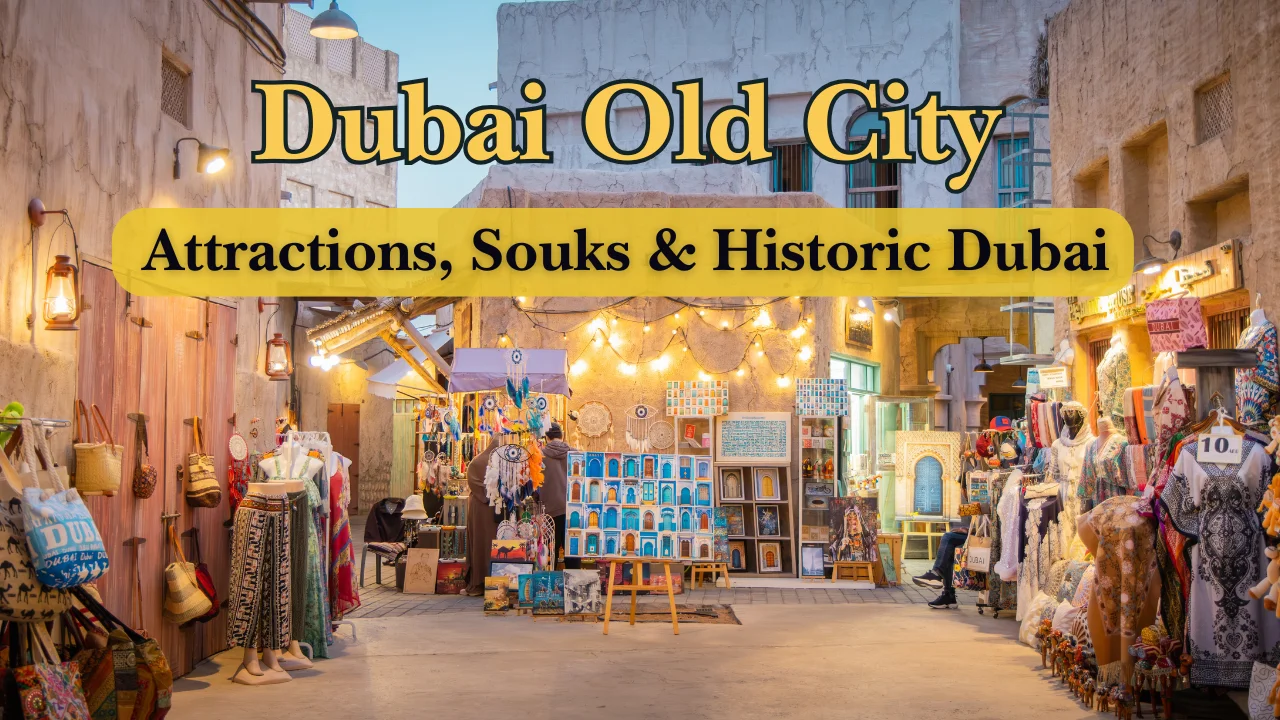
Dubai is a city of contrasts, where ultra-modern skyscrapers meet areas rich in history and culture. The Dubai Old City, also known as Old City Dubai, is a vibrant part of the emirate where visitors can experience traditional architecture, bustling markets, and centuries-old trade routes.
- Quick Travel Tips for Dubai Old City
- Location and Surrounding Areas
- How to Reach Old City Dubai
- Best Time to Visit
- General Timings
- Ticket Prices
- What Is Historic Dubai?
- Dubai Old City Tour: Top Places to Visit
- Things to Do in Old City Dubai
- Where to Eat in Old City Dubai
- Shopping in Old City Dubai
- Souks and Traditional Markets
- Gold Souk Shopping Tips
- Spice Souk Essentials
- Textile Souk Guide
- Old Dubai Shopping Experiences
- Dubai Old City Tour: Practical Tips
This historic area, which includes Bur Dubai, Deira, and the scenic Al Seef district, offers a deep dive into historic Dubai, showcasing Emirati life before modern development. From Dubai Creek to the Gold Souk, the old city is a must-visit destination for residents, tourists, and small businesses seeking a connection with the emirate’s heritage.
This guide will provide detailed insights into visiting the old city, including tips, attractions, cultural experiences, dining options, shopping, and practical advice to make your Dubai old city tour seamless and enjoyable.
Quick Travel Tips for Dubai Old City
Visiting Old City Dubai can be an enriching experience if you plan ahead. Here are some quick tips:
- Wear comfortable walking shoes for navigating narrow lanes and markets.
- Carry water and sun protection, particularly during summer months.
- Bring small cash notes for shopping and Abra rides.
- Start early in the morning or late afternoon to avoid crowds and midday heat.
- Be respectful of local customs, especially near mosques and cultural centres.
Following these tips ensures a smooth and enjoyable experience while exploring the historic side of Dubai.
Location and Surrounding Areas
The Dubai Old City is primarily split into Bur Dubai and Deira, separated by Dubai Creek, the city’s original trading waterway. Bur Dubai hosts Al Fahidi Historical Neighbourhood, Dubai Museum, and cultural centres, while Deira is known for its busy Gold Souk, Spice Souk, and traditional markets.
Nearby districts like Al Seef and Al Shindagha Heritage Area combine restored heritage architecture with modern walkways, cafés, and galleries. The old city is centrally located, making it easily accessible from most parts of Dubai and from Dubai International Airport.
How to Reach Old City Dubai
Getting around Old City Dubai is convenient thanks to multiple transport options:
- Taxi: Readily available and convenient for moving between districts.
- Metro: Al Fahidi Metro Station (Bur Dubai) and Al Ras Metro Station (Deira) are nearest stops.
- Abra boats: Cross Dubai Creek using traditional wooden boats for an authentic experience.
Best Time to Visit
The best months to visit Old City Dubai are October to April, when the weather is cooler and more comfortable for walking tours. Early mornings and late afternoons are ideal to enjoy sightseeing, shopping, and photography without the crowds.
General Timings
Most attractions and markets are open from 9 am to 10 pm, though some cultural sites and museums may have shorter hours. Planning your day around opening hours ensures you can enjoy the full experience without missing key locations.
Ticket Prices
Entry fees vary depending on the attraction:
- Dubai Museum: Nominal entry fee for residents and tourists.
- Al Fahidi Fort: Typically included with museum ticket.
- Special exhibitions or heritage workshops: Fees may apply.
Free Attractions
- Walk along Al Seef waterfront.
- Explore Al Shindagha Heritage Area.
- Take a public Abra ride across Dubai Creek.
Paid Attractions
- Entry to Dubai Museum.
- Guided tours at Al Fahidi Fort.
- Dhow cruise dinners along Dubai Creek.
- Cultural workshops at heritage centres.
What Is Historic Dubai?
Historic Dubai refers to the areas that existed before modern development, showcasing Emirati life, traditional trade, and architecture. It includes Bur Dubai, Deira, Al Seef, and Al Shindagha, which preserve the city’s cultural and commercial history.
History and Cultural Significance
The old city was once the commercial hub of Dubai, attracting traders from India, Persia, and other Gulf nations. The Al Fahidi Historical Neighbourhood reflects traditional wind-tower houses, narrow streets, and architectural features that have endured for centuries. Dubai Creek was central to the pearl trade and remains a key point for cultural and economic activity.
Old Dubai vs New Dubai
Old Dubai features heritage streets, traditional markets, and historical buildings, while new Dubai is known for its luxury malls, skyscrapers, and modern lifestyle. Visiting both areas highlights the emirate’s evolution from a small trading port to a global city.
Dubai Old City Tour: Top Places to Visit
The old city offers a mix of heritage sites, markets, and cultural experiences. Planning your visit to the top attractions ensures a comprehensive understanding of historic Dubai.
Bur Dubai
Bur Dubai is the cultural heart of the old city, with landmarks and souks that reflect the city’s past.
Al Fahidi Historical Neighbourhood
This heritage district features traditional wind-tower houses and narrow lanes. Visitors can see how early Emirati families lived and enjoy museums, galleries, and cafés that highlight cultural life.
Dubai Museum
Located in Al Fahidi Fort, Dubai Museum offers exhibits on pearl diving, traditional homes, and trade. It is ideal for both first-time visitors and residents interested in local history.
Textile Souk
The Textile Souk in Bur Dubai offers a wide range of fabrics, silks, and traditional clothing. Bargaining is common, giving visitors an authentic shopping experience.
Grand Mosque
The Grand Mosque is an example of Islamic architecture and serves as a religious and cultural hub. Visitors can admire its design from the outside or during guided tours.
Deira
Deira is the old city’s commercial district, known for its vibrant markets.
Gold Souk
The Gold Souk is famous worldwide for jewellery. Visitors can browse a variety of gold, diamonds, and precious stones while enjoying the lively atmosphere of traditional market trading.
Spice Souk
The Spice Souk is filled with fragrances and colours, offering spices, herbs, and natural remedies. It reflects Dubai’s trading history and culinary culture.
Traditional Markets in Dubai
Deira hosts markets for textiles, souvenirs, electronics, and household goods. Old Dubai shopping here provides a unique experience compared to modern malls.
Al Seef
Visitors can enjoy heritage walks, visit small art galleries, and stop at cafés for local snacks or refreshments.
Heritage Walks and Cultural Experiences
Al Seef combines restored heritage buildings with a waterfront promenade along Dubai Creek. Walking here allows visitors to enjoy traditional architecture, street performances, and art galleries while learning about the city’s history.
Dubai Creek
As the city’s first commercial center, Dubai Creek is the historic center of Old City Dubai. The creek still serves as a hub for trade, particularly for textiles, gold, and spices, and it divides Bur Dubai from Deira.
Abra Boat Ride
Taking an Abra boat ride across Dubai Creek is a highlight of any tour. It offers scenic views of Bur Dubai and Deira, and is a traditional form of transport that remains popular today.
Scenic Views of Old and New Dubai
From the creek, visitors can see the contrast between the historic districts and modern skyscrapers, making it a prime spot for photography and sightseeing.
Other Historic Sites
Besides the main districts of Bur Dubai, Deira, and Al Seef, the old city is home to several important historic sites that highlight Dubai’s rich heritage.
Sheikh Mohammed Centre for Cultural Understanding
This centre offers cultural programs and workshops that teach visitors about Emirati traditions, hospitality, and social customs.
Jumeirah Mosque
The mosque welcomes non-Muslim visitors for guided tours to explain Islamic faith, architecture, and etiquette.
Also Read: Blue Mosque Dubai 2026
Al Shindagha Heritage Area
Preserved heritage houses, wind towers, and museums showcase life in Dubai before the modern cityscape. Walking tours here provide insight into local history and architecture.
Things to Do in Old City Dubai
The old city offers a wide range of activities for all ages and interests.
Cultural Experiences
You may see historic marketplaces, renovated heritage buildings, and traditional wind-tower homes as you stroll through Bur Dubai’s winding alleyways and the Al Fahidi Historical Neighborhood.
Discover the history of the city, from pearl diving to trade with neighboring countries, by visiting the Dubai Museum and Al Fahidi Fort.
Explore Al Fahidi Fort
The fort is a historical landmark housing Dubai Museum. Visitors can learn about Dubai’s history, from pearl diving to trade.
Museums and Exhibitions
Small museums and cultural centres display local crafts, art, and traditions. They are ideal for families and educational visits.
Walking Tours of Heritage Quarters
Walking through Bur Dubai, Deira, and Al Seef allows visitors to experience the streets, markets, and architecture firsthand. Guided tours provide historical context and storytelling.
Food and Culinary Experiences
Many cafés and vegetarian-friendly locations in Al Seef and Bur Dubai provide snacks, desserts, and refreshing drinks for those looking for lighter options. A cultural experience that links tourists to the history and everyday life of old Dubai, sampling the local cuisine is more than just eating.
Emirati Cuisine
Heritage cafés and restaurants offer traditional dishes like machboos, luqaimat, and Arabic coffee. These meals reflect the local culture and daily life of historic Dubai.
Pakistani Cuisine in Old Dubai
Popular Pakistani restaurants serve biryani, kebabs, and curries, especially appreciated by residents familiar with the flavours.
Cafés and Vegetarian Options
Small cafés along Al Seef and Bur Dubai provide snacks, desserts, and vegetarian-friendly options, ideal for a break during tours.
Entertainment and Activities
Old City Dubai is fun for people of all ages because it provides a variety of activities beyond sightseeing. Along Dubai Creek, guests may enjoy a traditional Dhow cruise meal that combines local fare and cultural atmosphere with picturesque views.
Dhow Cruise Dinner
A Dhow cruise dinner along Dubai Creek offers scenic views, cultural ambience, and traditional cuisine.
Dubai Old City Safari Tours
Some operators offer guided safari tours that combine heritage exploration with desert adventure, giving visitors a blend of culture and leisure.
Where to Eat in Old City Dubai
At traditional cafés and restaurants, you may savor regional specialties like machboos, luqaimat, and Arabic coffee.
Local Emirati Restaurants
Traditional restaurants in Bur Dubai and Al Seef serve authentic Emirati meals, offering visitors a taste of the local cuisine.
Traditional Pakistani Restaurants
These restaurants are popular with both residents and tourists seeking familiar flavours, offering dishes like biryani, kebabs, and curries.
Cafés and Vegetarian-Friendly Spots
Small cafés offer light meals, snacks, and vegetarian-friendly options, perfect for breaks during walking tours.
Shopping in Old City Dubai
You may experience true old Dubai shopping and gain insight into the commercial culture of historic Dubai by visiting these markets. The old city offers beauty and variety, making it a must-visit location for both locals and tourists, whether you’re seeking for jewelry, textiles, or handicrafts.
Souks and Traditional Markets
- Gold Souk: Jewellery and precious metals.
- Spice Souk: Spices, herbs, and incense.
- Textile Souk: Fabrics, silks, and traditional clothing.
Gold Souk Shopping Tips
- Compare prices before buying.
- Check for authenticity certificates.
Spice Souk Essentials
- Ideal for spices, herbs, and traditional remedies.
- Bargain politely and ask vendors for recommendations.
Textile Souk Guide
- Shop for traditional fabrics and embroidered clothing.
- Haggling is expected; start with 50% of the initial price.
Old Dubai Shopping Experiences
- Visit small markets and street stalls for souvenirs, handicrafts, and household items.
- Old Dubai shopping is as much about culture as it is about buying goods.
Dubai Old City Tour: Practical Tips
Planning a Dubai old city tour is easier with practical advice:
- Wear comfortable shoes for walking long distances.
- Start early to avoid heat and crowds.
- Carry cash for markets and small purchases.
- Respect local customs and dress modestly near mosques and heritage sites.
- Use taxis, metro, or Abra boats to move efficiently between Bur Dubai, Deira, and Al Seef.
How to Plan Your Tour
- Allocate at least one full day for Bur Dubai and Deira.
- Start with heritage districts like Al Fahidi Historical Neighbourhood and Dubai Museum.
- Include souk visits and cultural experiences in your itinerary.
Suggested Itineraries
- Half-day tour: Al Fahidi Historical Neighbourhood, Dubai Museum, Textile Souk.
- Full-day tour: Add Abra ride, Gold Souk, Spice Souk, Al Seef, and a Dhow cruise.
Safety and Etiquette
- Dress modestly and respectfully, particularly in religious areas.
- Ask for permission before photographing locals.
- Stay hydrated and be aware of traffic in busy market areas.
Visiting Dubai Old City is a journey through time, offering cultural insights, authentic cuisine, traditional markets, and historic landmarks. Residents and visitors can experience the emirate’s heritage while enjoying scenic views, shopping, and unique activities. With proper planning and respect for local customs, a Dubai old city tour provides an unforgettable glimpse of the emirate’s past and its evolution into a modern city.

